DTF printing seems to be “set—pressed — ready”. But in practice, the same transfer behaves differently on different fabrics, and minor inaccuracies in press temperature or exposure time turn a neat design into peeling at the edges, smudging, or incomplete transfer. Therefore, it’s not “secret settings” that decide here, but discipline: prepress, humidity control, proper peel, adhesion, and precise layout preparation with graphic design templates. And yes, it’s all connected.
Thermal Press Settings: Temperature, Pressure, Time
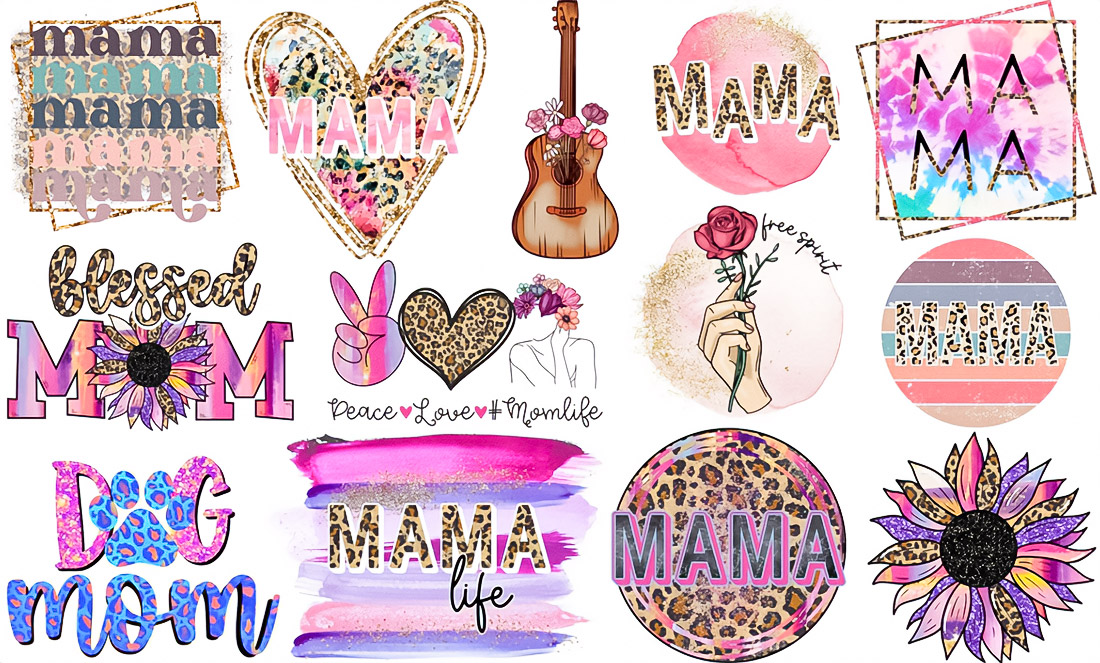
Start with a simple one: the thermal press should be predictable. The temperature of the press, the pressure of the press and the dwell time are the three pillars of quality. For most DTF transfer tasks, the typical mode is kept in the 320-330°F (160-165°C) zone and 20-30 seconds. The pressure is stable, without “swings”: for pneumatic presses, 70-80 psi is usually used, for electric presses, they are oriented to a level comparable to “level 4”.
Don’t skip the prepress. A short pre-press of 3-5 seconds does more than it seems: it smooths the surface, dries the fabric and reduces the risk of “bubbles” and peeling. If the press is only enough “by eye”, add the habit of checking the uniformity of heating. Uneven heating is distortion and poor adhesion, especially at the corners and edges.
Now about peel. Hot peel and cold peel require different film removal timings. For cold removal, allow 60-90 seconds of product cooling. For hot food, an interval of 5-10 seconds is often appropriate, while the transfer remains warm. Caught “between modes” you will get tears of small parts and unpleasant smudging.
Powder, Curing And Climate: What Breaks The Clutch
Glue powder is not a decorative powder, but a bonding base. If you don’t get enough sleep, you’ll get an incomplete transfer. Overfilled the design will become heavy and rigid, and the contour will be felt by the finger. Pay attention to uniformity: lumps and “bald spots” give different adhesion in one print.
Curing is a separate point of control. Typical mode: 320°F (160°C) for 2-3 minutes, until matte, without excess gloss. If over-dried, the transfer loses elasticity. If they are not dry enough, the glue does not have time to activate, and peeling along the edges comes very quickly.
The climate is also interfering. Humidity above 60% often leads to stickiness, glossiness and “sweating” transfers, as well as problems with transfer quality. Aim for 40-50% and keep a hygrometer handy. Keep the film and the finished DTF transfers stable: heat, moisture and light are silent degradation.
Layout And Color: DPI, Transparency, White Background
Bad artwork is not cured by temperature. The layout resolution should be 300 DPI, otherwise pixelation will become visible, especially on small text. If possible, use vector graphics; if not, prepare the raster correctly. Transparent backgrounds are important: formats with transparency like PNG/PDF/AI/SVG help avoid the “white box” that JPEG often brings.
Color management is a source of surprises. CMYK vs RGB errors, wrong color profile, incorrect ink load and the colors “float”. The initial recommendations include a guideline of 80-90% for ink load, but it is important to keep a balance: excess ink increases stickiness and reduces the predictability of peel.
Separately, there is a white underbase. On dark cloth, it is she who influences “ghosting” and ghosting. The practice of reducing the white layer by 1-2 pixels (choke/knockout) helps when a white outline is visible. Layer registration is also important: an offset of a fraction of a millimeter turns a clear contour into a dirty edge.
The DTFprocess benefits from chaos only through habits. Make a pre-press, fix settings, monitor humidity, check peel, monitor curing, and don’t skimp on surface preparation. Add a lint roller, a neat alignment, a test sample, and a regular nozzle check. Then the quality becomes repeatable, not random, and the transfer lives peacefully for 50+ washes with normal care.

Soccer lover, ramen eater, guitarist, Bauhaus fan and multidisciplinary designer. Working at the intersection of modernism and programing to save the world from bad design. My opinions belong to nobody but myself.